
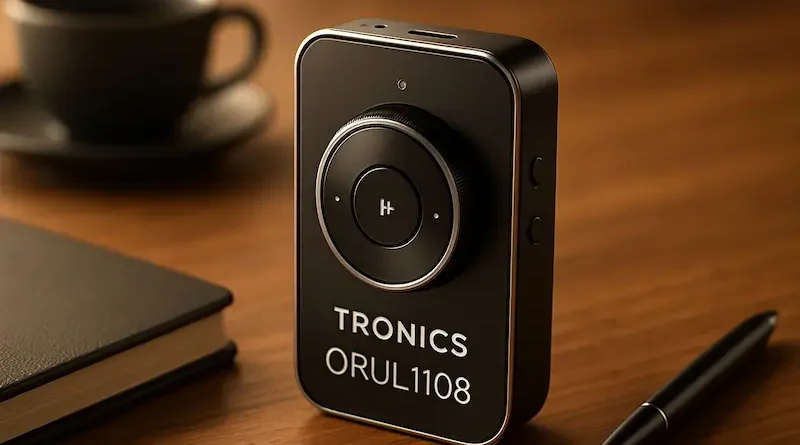
Tronics ORUL1108: Its Features, Performance, and Applications
The Tronics ORUL1108 has been a trending name across tech circles, primarily due to its association with smart device integration, diagnostics, and IoT-driven applications. While many blogs and forums highlight scattered features, there is a growing need to consolidate all technical and performance-based insights into one comprehensive analysis.
In this article, we will examine the ORUL1108 from a technical perspective, focusing on its architecture, connectivity, power management, AI-enhanced diagnostics, and the range of use cases where it can potentially create value.
By the end of this discussion, you’ll have a clearer picture of what makes Tronics ORUL1108 an intriguing piece of hardware in modern smart ecosystems.
Design Philosophy
Every successful device is driven by a design philosophy that sets it apart. The ORUL1108 embodies a blend of compact architecture, wireless adaptability, and AI-driven optimization. Unlike older Tronics models, which relied on traditional sensor networks and rigid configurations, this unit introduces flexible protocols suitable for industrial automation, personal devices, and home-based smart systems.
Key aspects of its design include:
Lightweight form factor for integration into embedded systems.
Modular circuit design for scalable upgrades.
Sensor-driven adaptability that reduces manual calibration.
Power-efficient chipsets compatible with low-voltage environments.
This design blueprint ensures the ORUL1108 is not limited to a single category but can be adopted in multiple environments, from consumer electronics to industrial diagnostics.
Hardware Specifications and Build Quality
The physical and internal build quality of Tronics ORUL1108 reflects a combination of durability and high-end component sourcing.
Notable hardware traits:
Casing and Materials: Heat-resistant polymers and anodized aluminum housing.
Core Processing Unit: Designed to handle AI-driven tasks with reduced latency.
Connectivity Ports: USB-C, modular expansion slots, and embedded wireless modules.
Sensors: Multi-environmental sensor support, ensuring real-time data capture in industrial and domestic scenarios.
The industrial-grade durability allows the ORUL1108 to function in both controlled and rugged environments, which is often a deciding factor in large-scale deployments.
Connectivity and Communication Protocols
One of the strongest highlights of Tronics ORUL1108 is its broad connectivity layer.
Supported protocols:
Bluetooth Low Energy (BLE): Optimized for short-range device interconnectivity.
Wi-Fi (dual-band): Ensures faster data transmission in IoT-based networks.
NFC and RFID modules: Ideal for secure authentication and logistics applications.
Cloud Sync Support: Seamless data streaming to third-party cloud ecosystems.
In practice, this allows developers and system integrators to incorporate the device into existing infrastructures without heavy modifications.
AI-Assisted Diagnostics and Smart Calibration
The AI integration in Tronics ORUL1108 sets it apart from conventional diagnostic devices. Instead of relying on manual recalibration or static preset values, the AI engine automatically adjusts sensor thresholds based on environmental conditions.
Benefits of AI-based calibration:
Reduced error rates in long-term usage.
Predictive alerts for maintenance and fault detection.
Adaptive learning that improves accuracy with time.
This makes the ORUL1108 particularly relevant in healthcare devices, smart homes, automotive electronics, and industrial IoT setups.
Power Efficiency and Battery Management
Modern devices cannot survive without optimized energy consumption, and the ORUL1108 excels here with its low-power chipset architecture.
Power features:
Battery Life: Optimized for extended usage cycles through intelligent consumption mapping.
Charging Support: Fast-charging USB-C compatibility.
Standby Optimization: Ultra-low power draw during idle states.
Green Compliance: Adherence to sustainable power consumption protocols.
For industries focused on scalability, such efficiency reduces operational costs and extends deployment lifecycles.
Potential Applications of Tronics ORUL1108
The versatility of this device means its utility spans across industries:
Industrial IoT:
Real-time diagnostics, predictive maintenance, and automated reporting in manufacturing plants.Healthcare Monitoring:
Non-invasive sensor deployment for patient tracking and remote diagnostics.Smart Homes:
Integration into security systems, environmental sensors, and automation hubs.Automotive Systems:
Onboard diagnostics, predictive alerts for vehicle health, and driver assistance modules.Research and Development:
Use in laboratories where precision calibration and environmental monitoring are essential.
Competitive Edge Over Similar Devices
Tronics ORUL1108 competes with other IoT and smart diagnostic devices, but its unique combination of AI adaptability, strong wireless protocols, and modularity gives it an edge.
Where many rivals focus only on connectivity or hardware, Tronics has balanced both, ensuring that integrators and consumers receive a well-rounded solution.
Challenges and Limitations
No device is without its challenges, and ORUL1108 is no exception.
Possible limitations:
Lack of official specification sheet available publicly.
Dependence on AI calibration may create complexity in manual override cases.
Pricing transparency is limited in open markets.
Support ecosystem is still emerging, which can delay large-scale adoption.
Conclusion
The Tronics ORUL1108 stands as a promising smart device that merges durability, AI-powered intelligence, and broad connectivity into one cohesive unit. While its official specifications remain scattered across different online sources, the repeated emphasis on AI calibration, wireless adaptability, and power efficiency showcases its competitive potential.
For engineers, businesses, and end-users, the ORUL1108 represents an opportunity to embrace the next generation of diagnostic and smart integration tools. As IoT adoption continues to rise, the demand for reliable, modular, and energy-efficient devices like Tronics ORUL1108 will only grow stronger.
Check out the rest of our site for more useful and interesting content. Thanks
